Mealtime for your cat may be very straightforward – you offer the food and your cat is right there to eat it, or you offer food and kitty nibbles at will throughout the day. In some households though, especially where there are multiple cats, mealtime may be a little more complex and requires finesse to make sure everything remains peaceful and happy.
If you’ve been wondering what your cat’s body language means when she’s around food, here are some clues to help you better understand what might be going on.
Sitting by Empty Food Bowl
Let’s start with an easy one. Your cat takes great comfort in familiar routines so her internal clock lets her know when it’s about to become mealtime. Even though you may never be late in offering food at the same time every day, she may still sit there in anticipation. If you have a rescued cat who previously had to hunt for meals, she may always retain concern over whether there’s enough food. This can also be the behavior of a cat who is put on a weight reduction regimen. Sometimes a cat will sit by the food bowl and meow as it gets closer to mealtime. Every time you walk into the kitchen you may be greeted by a vocal reminder.
Unless you free-feed by leaving dry food available, make sure to take food bowls up in-between meals. Just leave fresh water available. To ensure you don’t reinforce constant meowing, don’t give in and offer food earlier than you normally do just to quiet the cat because it sends a message that meowing works. Instead, make sure there’s enough environmental stimulation to keep her busy so focusing on an upcoming meal isn’t her only activity. Engage in interactive play sessions at least twice a day, and leave interesting (and safe) solo toys out for her. Create environmental enrichment through the addition of things such as a cat tree, window perches, cat shelves, cat-interest videos, and so on. If your cat still insists on sitting at the feeding station, don’t acknowledge it until the actual scheduled mealtime. Just be sure the feeding schedule is correct for your cat’s age, health, and activity level. If you’re concerned you may not be feeding enough, talk with your veterinarian. You may want to incorporate the use of puzzle feeders as well, to help your cat worry less about where the next meal is coming from. Puzzle feeders can be created for both dry or wet food and can be a helpful and fun addition to a cat’s enrichment, especially for a kitty on a diet. For dry food, we recommend Complete Health with Wholesome Grains to help provide a nutritious and balanced diet. As for wet food, cats love variety in their diet, so they’re bound to find a flavor they love in our Complete Health Variety Packs. Do an online search for cat puzzle feeders and you’ll see many companies make them. You can even make homemade ones.
Rubbing Against Your Legs as You Walk to the Kitchen to Prepare Meal
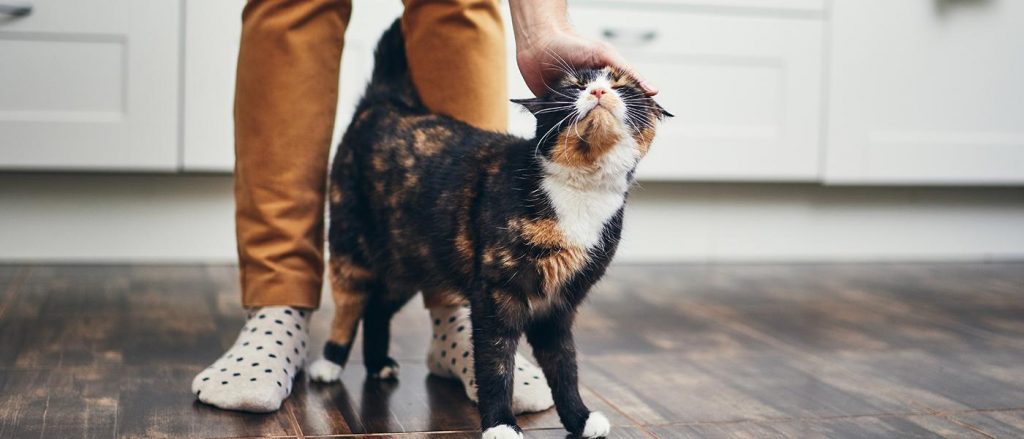
Flank rubbing is a cat’s way of bonding in a very respectful way, as one cat may flank rub a higher-ranking cat. As you walk to the kitchen, especially when your cat anticipates her meal is about to be prepared, it’s a way of showing excitement and acknowledging that you’re a loved member of her family.
Eating Only When You are Present
When you place the food bowl down for your cat and walk away, only to have her pace back and forth between where you are and her food bowl, it may mean she wants you to stay with her. She may need the extra security of having you physically nearby. She may like the extra comfort of knowing you’re there, but if she seems afraid to eat without you then it’s time to look closer at the environment to see what needs to be done to create a secure, peaceful meal experience. For example, make sure she hasn’t been routinely disturbed by other cats, the family dog or other family members while eating.
Paw Scooping
If your cat eats by scooping the food out of the bowl with her paw, it could mean a couple of things. The bowl could be an incorrect size and shape for her. If the bowl is narrow and deep, it may be uncomfortable to put her head into it to reach the food without squishing her whiskers. A cat’s whiskers are very sensitive and getting bent can create discomfort. Another possible reason is that it reduces her ability to see what’s going on in her environment. If a multipet home, it can be a disadvantage for her to have limited visual ability, especially when eating. Make sure the food bowl is low and wide enough for her to comfortably eat without bent whiskers or creating a visual block.
Paw scooping of dry food can sometimes be a playful behavior as well. A cat may develop a habit of scooping a couple of pieces out of the bowl to play a little before eating.
Trying to “Bury” Food
The cat walks over to the bowl, sniffs, and then paws at the floor as if she’s trying to bury the food. Many cat parents interpret this as an insult because the behavior resembles the burying done after elimination. It’s not the cat’s way of saying she hates your food choice. She just may not be hungry and the burying display is part of her survival instinct. In an outdoor setting, a cat wouldn’t want the smell of food in her core area because it could attract predators.
Looking Around While Eating
The cat looks over her shoulder repeatedly or she eats a little and then stops to look around before taking another bite. This could indicate that she’s nervous in the location where her meal is being served or she might be worried another cat is going to threaten her resource. This is a behavior more commonly seen in multicat environments or one where mealtime is in a hectic room (ex: several people moving around the kitchen preparing the family meal while kitty is trying to eat).
To address this, look at food bowl placement. Don’t put food and water bowls right up against the wall because it prevents the cat from being able to see what’s happening in the room. Slide the bowls out so your cat can stand between the wall and the bowl in order to have a good view of the room. In a multicat household where a cat gets nosed out of the bowl or if there’s multicat tension, separate feeding stations to create more security. feeding stations may need to be set up in various rooms to prevent mealtime intimidation.
Resource Guarding Behavior or Aggressive Display
A cat is a social animal, but the social structure is built around the availability of resources. Food is obviously a critical resource and if a cat feels it’s in danger, she needs to guard it. This behavior can present as a display of aggression if someone (cat, dog, or family member) comes close while she’s eating, or she may hang out in the feeding area in order to let others know this is her turf.
Make sure there are adequate feeding stations so no cat feels threatened or intimidated by a resource-guarding kitty. Don’t set up one big food bowl for all cats to eat from. Everyone should have their own safe meal location.
Puzzle feeders may also help cats realize food is readily available. Puzzle feeders also provide the opportunity of having some fun as cats “hunt” for their food.
Cats aren’t social eaters and it can create stress to be close together during meals. Even the best kitty friends may feel more comfortable with a little space between each other while eating. Sometimes the best solution is to feed in separate locations. What’s most important is that mealtime is peaceful and secure.
Nosing into Another Cat’s Food Bowl
A cat may eat her own food way too fast and then push companion cats out of their own bowls in order to eat their food. Sometimes a cat may ignore her own food in order to eat another cat’s food before returning to her own bowl.
A cat who displays this behavior may be concerned there won’t be enough food. A former stray may engage in this behavior even though there’s plenty of food being offered at each meal. It can also be intimidation that a higher-ranking cat may display to a lower-ranking kitty.
Make sure the cats are fed far enough apart. You can either monitor mealtime to prevent stealing or set up feeding stations in separate rooms.
Eating Too Fast
A cat who eats too fast may end up vomiting it all back up. First, make sure there isn’t an underlying medical cause for the behavior. If your cat gets a clean bill of health, it may be that she’s worried there isn’t enough food for her or it could be that you’ve spaced the meals too far apart and she’s just way too hungry. Cats have small stomachs so multiple small meals per day are more natural than one or two big meals. Talk to your veterinarian about how much and how often to feed.
To slow your cat down during meals, consider using a slow-feeder bowl. These are commonly used with dogs. The bowls have obstacles built in so the animal has to work around them to get the food. You can also feed your cat out of a muffin tin where you place a little food in each compartment. If feeding wet food, smush the food down so it takes a little longer for your cat to get at it. Puzzle feeders are good for fast eaters as well.
Tilting Head and Eating on One Side of the Mouth
This is typically a medical issue due to something such as a tooth problem or mouth pain. If you see this behavior while eating, your cat needs to be seen by the veterinarian.
Have Questions About Your Cat’s Behavior Around Food?
Making mealtime a success should be a top priority for cat parents. If you’re unsure of what your cat is trying to tell you when it comes to mealtime, start by talking to your veterinarian to rule out any underlying medical reason for the behavior.
The Covid-19 pandemic has caused unprecedented levels of stress for people across the world. There is no need to explain this any further, as you surely know what we mean. However, all this disruption has had at least one positive consequence: over the past couple of months, the number of pets being adopted has hit an all-time high. So much so, that some animal shelters have even been left completely empty.
While many of these same animal shelters were worried that the increased number of adoptions will result in increased numbers of surrendered pets shortly after, so far it hasn’t happened. The reason for this is simple: dealing with all of this uncertainty is simply easier with a dog by your side. You don’t have to take our word for it, though. Today, we’ll talk about all the ways dogs help us deal with stressful situations that have been proven by many scientific studies.
Scientifically Proven Benefits Of Having A Dog
“With rising healthcare costs, the positive effects of dogs on our overall health and their role in assisting in the work of healthcare professionals continue to be avid areas of scientific study” – Dr Kath Dench – Veterinarian Advisor at The Gentle Dog Trainers.
“Healthy aging is a lifelong process of making healthy decisions and lifestyle choices. Ensuring physical health at every stage of life helps us live longer and reduces risk of illness, disability and death. A significant body of literature has demonstrated the positive relationship between pet ownership and physical health, including increased physical activity and cardiovascular health.” – HABRI
But what exactly does this mean? Well, here are 4 concrete ways in which our canine companions make us better at dealing with tough situations:
1. Dogs Make Us More Resilient To Stressful Situations
Have you ever noticed you feel calmer when you are around your dog? Well, studies have shown it’s more than a subjective feeling. Many studies, for example, have confirmed that just being around a friendly dog helps reduce your blood pressure – which is a common reaction to highly stressful situations. Other studies have shown that simply stroking an animal lowers our heart rate and makes us more calm – and there is no need to mention that dogs enjoy this too! Being around dogs also reduces levels of cortisol, which is another strong indicator of stress.
2. Pets Make Us Better At Social Interaction
Interacting with your dog is, arguably, a form of social interaction. However, this is actually not the only way dogs help us be more social. For example, studies have shown that humans accompanied by pets tend to appear more approachable and trustworthy. Not only this, but having a pet tends to make us feel less lonely, less aggressive, and more empathetic towards other people.
3. Dog Owners Get More Exercise
Although it’s hard to prove this, due to many variables involved in every human’s life, there are strong indications that pet parents have better mental and physical health than those without pets. Go figure! But how is this possible?
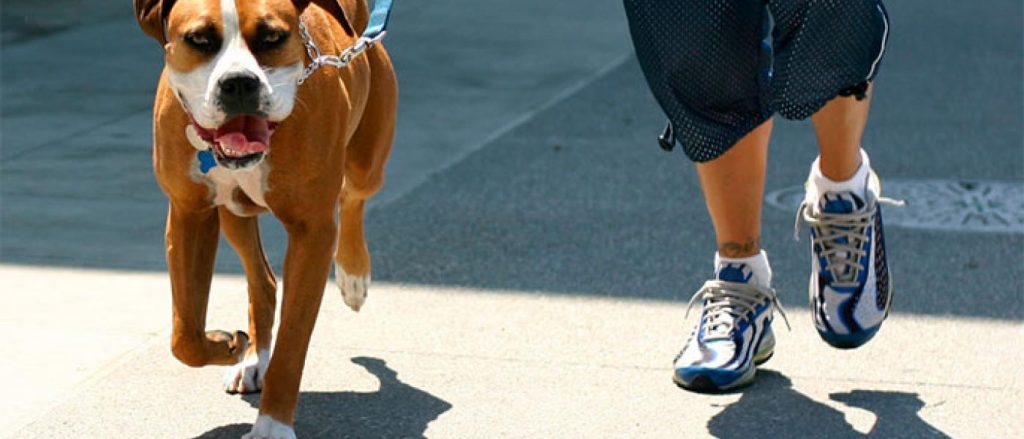
Well, there is at least one simple explanation. Dog owners simply tend to get more exercise, on average, than people without pets. During the pandemic, long walks with your dog might not be always an option, but there are still activities you can do together with your pet. Enjoying a game of catch with your dog can be a pleasant and healthy activity for both of you.
4. Dogs Simply Make Us Happier
After reviewing a sea of previous research, the study from Frontiers in Psychology concludes that interaction in dogs must have all of these positive effects because it stimulates the production of oxytocin – the hormone of happiness and love. There are countless reports of dogs helping patients suffering from depression and anxiety. These days, we all might be dealing with this kind of feelings, and having a canine companion definitely helps!
Final Thoughts
In the year 2020, the way we live has changed in ways we could not have imagined, and some speculate it might be changed forever. In any case, we are facing a lot of uncertainty, and having a faithful companion that is always there for us is a real blessing. There is no doubt – dogs help us deal with stressful situations in so many ways. They provide companionship, make us feel less lonely, and help us be in the moment. Not to mention that simply taking care of another living being is an incredibly fulfilling experience.
Ah, the joys of dog ownership. Collecting little baggies of fun on your daily walks, apologizing to the neighbor for the loud barking your furry friend lets out whenever he sees a (shhh! Don’t say it!) squirrel, and, of course, brushing his teeth. There are many wonderful moments provided by your pooch, but the time spent in doggie dental care might not rank high on your list of favorites. Which is why most owners (gulp) tend to skip it. There are so many questions: “How do you brush dog teeth?” “What do you use for dog teeth cleaner?”
The fact of the matter is this: your dog’s overall health depends on the health of his teeth. Sounds crazy, but just like with humans, poor dental health can cause a wealth of other health problems , including heart, liver and kidney disease. So, of course, it’s critical that you incorporate dental care into your dog care routine (including brushing your dog’s teeth and offering toys and treats that promote good dental health ), but it’s also important to schedule a dental cleaning with your veterinarian.
What is the cost of dog teeth cleaning? How much does it cost to have your dog’s teeth cleaned? And how often should you have your dog’s teeth cleaned? First, let’s talk about what is involved in a dog dental cleaning.
What Happens During a Dog Dental Cleaning?
Exam, X-Rays and Bloodwork
As with any procedure, a dog dental cleaning begins with a thorough examination by your veterinarian and x-rays of the mouth are taken to asses any damage beneath the gumline. Because a dog must be sedated to undergo this type of treatment (and really, who wouldn’t want to be a little sedated at the dentist?), most veterinarians require a bloodwork panel to check for anything that might cause a negative reaction to anesthesia. Your dog must be healthy enough to be sedated to be treated, so don’t skimp on this important step. Also keep in mind that with any anesthesia, fasting is typically required for some time before the procedure, so make sure to follow your vet’s instructions about removing food and water from your pooch for the allotted time prior to the cleaning.
The Cleaning
After your buddy has been deemed ready, anesthesia will be administered, and the cleaning begins. First, a technician will remove any large pieces of tartar (that gross white, brown, yellow, or orange material that gathers on the teeth). After the tartar is scraped away, the teeth are analyzed for signs of infection or disease and a decision is made regarding the best course of action, such as whether there are any teeth that need to be removed. Once any of the more serious issues are addressed, the plaque removal begins, typically done with an ultrasonic scaler (a dental tool that vibrates at a high speed). Most plaque is made of bacteria, so leaving it below the gum line is a quick route to gum disease for your pup. An infection here can spread through the blood stream to the heart, kidneys, or liver, so removing this plaque is the most important step of the dental cleaning. Dental probes are then used to measure the depth of the pockets between the tooth and the gum; deep pockets here indicate periodontal disease. The teeth are then polished and treated with fluoride, which helps prevent future tartar and plaque build-up. Sometimes after this step, a sealant is applied to the teeth that helps keep out future tarter and plaque. Finally, your fur baby will spend a little time in recovery and then will need plenty of love and kisses once returning home. When considering the described treatment here, remember that every veterinarian practices differently, so talk with your vet about what to expect.
What is the Cost of a Dog Teeth Cleaning?
The simple answer is anywhere from $150 to $500 without extractions, which is a pretty big range. While prices will vary from vet to vet, there are a few factors that play into the cost of the procedure, including:
Your Dog’s Weight This seems like a simple factor, but a heavier pet will require higher dosages of all medication, including anesthesia, all of which adds on to the cost of dog teeth cleaning.
Your Dog’s Age Older dogs may require more extensive pre-procedure bloodwork and screening, which may end up costing more.
Existing Dental Damage Once your veterinarian has cleaned away the tartar and plaque, she can take a better look at the current state of the teeth and will have a clearer picture of decay or disease. At this point in the procedure, it may be necessary to extract teeth that have gone beyond repair, and these extractions will incur an additional fee, sometimes well into the thousands. It’s a good idea to talk over potential these additional costs with your vet prior to the cleaning so that you’re not blindsided with a bill after the fact.
Medication Post-cleaning medication may be required, including antibiotics to prevent infection or painkillers for post-extraction ache.
How Often Should Your Dog Have a Dental Cleaning?
Well, this all depends on you. The experts recommend a dental cleaning every six months to a year, but that time could be extended if you are caring for your dog’s dental health on a consistent basis. This means brushing at least every other day , providing your buddy with toys that help clean the teeth, and offering treats that clean your dog’s teeth . What better way to help lower the cost of dog teeth cleaning?
Keeping your dog’s teeth clean doesn’t have to feel like a chore when you can offer Whimzees as a fun and delicious way to clean. Whimzees dental treats offer the best way to keep your dog’s dental cleanings fewer and farther between, helping to prevent the plaque and tartar that requires a professional cleaning. Try Brushzees for the ultimate in dog dental care, with a unique design that offers fresher breath and cleaner teeth.
Today, dog food is available in a wide variety of formats, flavors and forms. Since freeze dried dog food has recently become more popular, many pet parents have questions about this new type of dog food. Here, we’ll break down what freeze dried dog food is, as well as the benefits and challenges that come along with feeding your dog freeze dried food. Then we’ll share our recommendation for how to incorporate freeze dried food into your dog’s diet. First, let’s cover why freeze-dried dog food is becoming popular. Pet parents and nutritionists agree that high quality, proteins like turkey, chicken or salmon, often found in freeze dried foods, deliver excellent nutrition. Protein is essential for the growth and maintenance of almost all the tissues in a dog’s body. At a molecular level, dietary protein supplies the amino acids necessary for the body to build hair, skin, muscles, cartilage, tendons and ligaments. And to a dog, a protein-rich diet will most always be their top preference, because high-quality meat ingredients deliver a delicious aroma and taste.
What is freeze dried dog food?
Freeze-drying is a technique that preserves raw ingredients such as fresh meat to deliver a finished dog food product which is safe, shelf stable and lightweight. Freeze dried dog food is technically raw and full of nutrients.
What are the benefits of feeding freeze dried dog food?
Freeze-dried dog food provides minimally processed nutrition for dogs which appeals to pet parents seeking an alternative to plain kibble. Excelling on taste, freeze dried dog food can be used as a full meal for fussy eaters, or a tasty topper for all dogs to add an element of variety to their meals.
Minimally processed
Preserves taste of meat ingredients
Preserves ingredient nutritional value
How is dog food freeze-dried?
Freeze-drying is a special form of drying that removes moisture at very low temperatures. In freeze-drying, raw ingredients are initially frozen and then placed in a strong vacuum that converts the water in the food into vapor. You may already be purchasing freeze dried foods for yourself, with some examples being instant coffee or cereal with freeze dried berries.
How does freeze-drying impact the nutritional content of the food?
Freeze-drying preserves more of the nutritional content of the raw ingredients as compared to other methods such as cooking or dehydrating pet food. Because the raw meat ingredients are freeze-dried, it helps to leave in tact the wholesome nutrition that is naturally present.
What types of freeze dried dog foods are available
Freeze dried dog foods include everything from tasty meat treats, to freeze dried dog food mixers or toppers and even complete and balanced freeze-dried meals.
Are all freeze-dried dog foods the same?
Whilst the technique is similar between brands and companies, the difference will instead come down to what types of foods and ingredients are being freeze dried. High quality products often include full meat pieces and visible fruits and vegetables. Some brands with freeze dried dog products may not freeze dry cuts of whole raw meat. Instead, they may use a mix of ingredients to create a meat nugget like that of a hamburger or sausage.
Should I be worried about the bacteria from fresh meat in freeze-dried dog food?
If you are thinking of feeding freeze dried dog food, it’s best to reach out to a brand in order to understand how they ensure the safety of their products. At Wellness, the quality and safety of every recipe we craft is paramount in all that we do. That is why every batch of meat that we freeze dry undergoes a special High-Pressure Pasteurization (HPP) treatment step prior to the freeze-drying process. This innovative safety step adds additional pressure which destroys bacteria whilst maintaining the integrity of the ingredients.
How can I incorporate freeze dried food into my dog’s diet?
Dog food diets that are made of completely freeze-dried ingredients can be quite costly, may be hard to find, and may not be suitable for all dogs. Our recommendation is to incorporate some freeze-dried nutrition into your dog’s diet, while still maintaining the convenience of feeding your dog on their regular schedule.
About Wellness CORE dog food products with 100% freeze dried meat:
At Wellness CORE we believe firmly in always doing things the right way and never the easy way, so our freeze dried products feature only 100% meat ingredients. We produce our freeze-dried products in our company-owned facilities in Minneapolis, MN.
Wellness CORE offers pet parents premium freeze dried products such as Wellness CORE Bowl Boosters. Wellness CORE Bowl Boosters are freeze dried meat pieces that can be added to any current wet or dry dog food to customize a dog’s meal and add some extra protein. At Wellness, we also offer Wellness CORE RawRev, which combines Wellness CORE’s nutrient-dense, high-protein kibble with pieces of 100% freeze dried meat evenly dispersed throughout the bag. The inclusion of these 100% freeze dried meat pieces in every scoop means your dog will get the crave worthy aroma of meat along with the nutritional benefits of high-protein, mineral-rich freeze-dried meat.
Our Wellness CORE RawRev dog foods are available in both grain free and with wholesome grains varieties. Wellness CORE Bowl Boosters can be added to your dog’s existing food without transitioning, but if you are planning on transitioning your dog from a current food to Wellness CORE RawRev with freeze-dried meat, you should slowly transition your dog to the new food over the course of 3-5 days to avoid any digestive issues.
If you need help determining which Wellness CORE RawRev or CORE Bowl Boosters recipe would be best for your dog, please reach out to us at 800.225.0904, Mon-Fri, 8am-5pm ET to speak with one of our knowledgeable Consumer Affairs team members. Also, keep in mind that our products are guaranteed, so if something you try doesn’t work for your dog, you can return it for a full refund.
Has your dog tried Wellness CORE RawRev? If so, share your photos by using @wellnesspetfood and #WellnessCORERawRev on Instagram, Twitter or Facebook for a chance to be featured.
CBD Oil has been the talk of medical journals for years, and in the past few years has popped up frequently in mainstream news as an alternative medical approach to a variety of health issues. As more and more has been discovered about the uses for CBD oil, its use in pet health treatment has gained in popularity, particularly for the treatment of anxiety. CBD Oil for dog’s anxiety is a focus of discussion, and many pet parents are asking the question: will CBD oil help my dog’s anxiety? The topic itself (as with all CBD products) is a complex one, but as with all health treatments, there are pros and cons. Here’s what we know about CBD oil for dog’s anxiety:
CBD Oil: What is It?
Cannabidiol, or CBD, is a compound derived from hemp, and to be classified as CBD, the oil must contain less than 0.3 percent of delta-9-tetrahydrocannabinol (THC), the main psychoactive compound in cannabis that produces the ‘high’ feeling. Because CBD contains less than 0.3 percent THC, there is no psychoactive reaction. Most CBD oil is derived from hemp.
Benefits of CBD Oil
It’s important to start by saying that there is not definitive scientific data supporting the use of CBD oil for dogs, but there is a growing amount of anecdotal evidence from pet parents that lends to CBD’s use for pain, particularly neuropathic pain. CBD is also used to help control canine seizures. The use of CBD oil for daily health treatments in dogs is growing in popularity, and many dog owners swear they have seen a striking difference in their dog’s health, including treatment for inflammation, cardiac problems, nausea, lack of appetite and anxiety, both in daily anxiety management and in short-term anxiety treatment, such as travel or the sounds of Fourth of July celebrations.
Chronic anxiety in dogs is not only miserable in the moment, but it can produce more serious long-term effects, such as cardiac problems, high blood pressure, stroke, higher susceptibility to illness and even a shortened lifespan. CBD can produce a calming effect, and for many dogs that suffer from chronic anxiety, CBD Oil can offer much-needed relief and rest, over time leading to overall health and wellbeing.
Potential Risks and Side Effects
As with all health treatments, the user must weigh potential benefits against potential risks or side effects. It’s important to note that perhaps the most important (and preventable!) risk is that the CBD market is still fairly new and is not yet regulated or tested for safety. So when purchasing CBD oil for pets, many dog owners can’t be sure of what they’re buying. Is the product good quality? Are there any toxins present? Is the CBD oil properly formulated? Is there even CBD oil in there at all? The easiest way to avoid risks in this area is to speak with your veterinarian and purchase oil directly through them. This allows you and your vet to formulate a plan for consistent and accurate use of CBD oil, as well as test regularly to ensure proper dosage and receptiveness.
Other potential side effects can include dry mouth (which will increase your dog’s thirst), lowered blood pressure (which could cause lightheadedness and dizziness) and drowsiness. Because CBD oil treatment for dog anxiety is somewhat new, it’s important to note that other side effects could be present, so it’s important to closely monitor your pet and start with the smallest dosage available to ensure no allergic or otherwise adverse reaction.
A Well-Balanced Treatment Plan
Anxiety in dogs can be the result of internal and external factors, so responsible pet owners should develop a well-balanced treatment plan:
Take Away the Stressors
Is there a loud television constantly blaring? Does the vacuum cause anxiety? Does the sight of the mailman throw your dog into a fit? Your dog is relying on you to create a safe environment with as few stressors as possible, so take away anything in your dog’s immediate environment that might be causing anxiety.
Create a Safe Place
Of course you can’t tell the mailman not to deliver the mail, and you can’t control a thunderstorm’s arrival, but you can offer your dog a safe place in your home, one that is created just for them. Choose a small room (bathroom, laundry room) that’s far from your home’s main entrance, and make sure your pooch has a snuggly bed and plenty of food, water, snacks and toys. This should feel like a safe place, one that he can retreat to when anxiety starts to take over.
Start an Exercise Plan
Just like with people, animals need the opportunity to shed stress through exercise, even if just for a quick walk around the block each morning and evening. Without regular exercise, the stress manifests as tension, which leads to chronic pain, digestive issues, and other health problems.
Incorporate True Nutrition
If we constantly put junk food into our bodies, there’s nothing for the body to pull from when it needs sustenance to combat illness and stress. Just as we must maintain a balanced diet with true nutritive values to perform at our best, dogs need an equally nutritious and wholesome diet to live healthfully and combat illness and anxiety. Try Wellness CORE, a completed and balanced, high-protein diet. Wellness CORE has no fillers, contains meat as the first ingredient and is available in grain free and with wholesome grains options. Wellness CORE is natural and free of artificial flavors, colors and preservatives. Ingredients like beef and salmon can pack a powerful stress-fighting punch.
CBD oil for your dog’s anxiety might be the right choice for your furry friend, or there may be a different option that works best for you. When you’ve removed every stressor you can, created a safe place, and have incorporated the right dog food and regular exercise and your dog is still suffering from anxiety, speak with your veterinarian about treatment options. No dog should have to continue suffering with anxiety, so find the plan that works best for you and your buddy as soon as you can.
Cats do nap a lot. But extended napping could be sheer boredom. Contrary to the assertion that they are aloof and independent, cats do like to engage with their favorite people. Here are some quick fixes to offer your kitty both mental and physical stimulation and, at the same time, boost your quality time together.
1. Tricks and Treats
Believe it or not, felines will work for praise and tasty rewards. Consequently, clicker training works well with cats.
Let’s Start with “Sit”
Hold a treat low above her head, just far back enough so that in order to reach it, she has to sit. Say “sit” as you are performing this action and offer lots of praise when she does. And, of course, give the treat!
Teaching her to sit on command is a plus to get her to wait patiently for her food bowl instead of winding around your legs and getting underfoot. That way, you are actually spending quality time together at mealtimes. Cats are fast learners and repetition will soon have her sitting on command without the treat.
Once she’s sitting on command, you can move on to this simple trick that will certainly impress.
To teach the high five “slap,” wiggle your fingers and move your hand in front of her paw on the ground. When she pats your fingers with her paw, click and treat.
When she’s consistently patting your moving fingers, slowly raise your hand off the ground until its up in the air aligned with her shoulder height. When the cat raises its paw, put your hand in the path of the movement and click the instant the paw touches your hand.
Next move your hand slightly so the cat has to aim for your hand with its paw to get clicked and treated. Finally, add a cue such as “high five” or “paw up” when you hold out your hand. Click and treat.
Choosing her favorite treat will of course be an added incentive. Stock up on her favorite Wellness Kittles. They are all natural, grain-free, crunchy and only contain 2 calories per treat so they are perfect for training. Flavors include chicken, duck, tuna, salmon, turkey and whitefish, all with healthy cranberries.
Clicker training can be used to teach cats all kinds of fun tricks including playing Three Blind Mice on a piano. It’s a great way to spend quality time together.
2. Let the Indoor Hunt Begin
Cats in the wild are used to hunting and working for food. So, set up a treasure hunt in your home by hiding treats and some favorite catnip-filled and kicker-styled toys in different locations. Include toys that roll and wriggle too so that your cat has lots to discover in her own time. This is a great way to prevent boredom and keep felines engaged and ‘on the hunt’ especially when they are home alone.
There is also a great selection of specially designed cat puzzle toys and treat balls which are ideal for hiding scrumptious morsels and offer excellent stimulation as felines work out how to retrieve them.
3. Wind It Up with Wands
Wand games are a great way to engage your feline and spend quality time with her too. Actively engage her with a wand toy making sure you always swing sideways like a pendulum so that she doesn’t pounce forward and inadvertently scratch you. A wand should be light weight so it’s easy for you to play with too. Cats are attracted to those with realistic bugs or furry, feathery critters on the end. Games don’t have to be only airborne. Many cats enjoy watching the toy being trailed along the ground so they can pounce on it. When she has the critter firmly under her paw, wriggle the string gently so that it moves. When she releases it, then swing it in the air to start the games again. Often cats will pick up the wand (from the toy end) and carry it over to engage you in more games. If you throw it a short distance, you can encourage her to run after it and retrieve it and bring it back for more.
There is nothing like a nice tall cat condo, strategically placed at a window to keep your cats in engaged in observing outdoor activities whether its birds flying by, people walking and even cars coming and going. Apart from the outdoor view, cats really enjoy vertical space as it offers them a personal space to watch the activity in the room too as well as a place to escape to from other household pets for a snooze.
Training a cat to walk on a leash is a great way to enrich her lifestyle by safely allowing her to enjoy the sights and sounds of the great outdoors. It’s also an excellent way of revving up her exercise routine.
However, a cat’s personality will play an important role in deciding if she is game for a fresh air challenge. An adventurous cat will probably embrace this opportunity to sniff around outside and even stop and lie down to survey her surroundings. While skittish scaredy cats may resist, preferring the view from the kitty condo instead. It also depends on your neighborhood. If there are lots of dogs out and about on the route, or you live in a neighborhood where coyotes roam even in the day time, consider a cat stroller as an outdoor alternative.
They are an excellent option for a change of scenery. You can even stop and sit on a bench and let her watch the world go by. Cats, if they are allowed outside on their own will often go and hang out under a bush and watch insects, butterflies and birds from this vantage point. And they can do exactly the same thing from the comfort and safety of a stroller.
It’s also a great way to get you to spend time with her and out and about too!
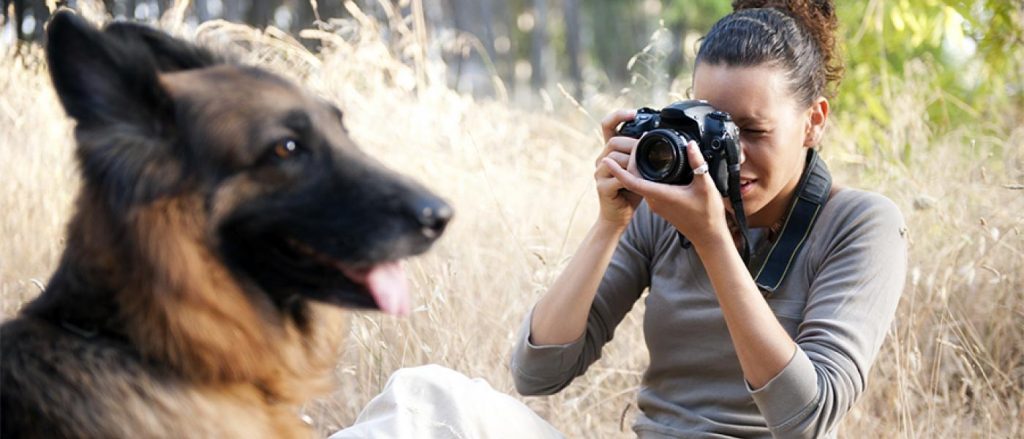
With the increase in social media accounts just for pets, and fun social media photographic and video challenges, cats and dogs are turning into internet sensations. Whether you are planning to join in the fun, or simply want to take some great pix for the family photo album, here are some photographic tips to capture some memorable entertainment.Before you start, be sure to stock up on treats in order to offer tasty rewards for their efforts!
1. Action Ready
Smart phones have very sophisticated built-in photographic, editing and enhancement features. So, it’s very easy to always be camera ready to capture funny pet antics and then crop and re-touch before posting. Knowing your phone’s settings from portrait to panorama and its basic lighting features are a good place to start.
2. Backgrounds That Can Enhance
If you’re planning a photo session with your dog or cat, keep the area clear of clutter. And, if you planning to introduce a background material or throw, choose something that will show off your pet’s fur coloring to its best advantage. If possible, “dress up” a favorite snooze place where you pet is comfortable instead of trying to entice them over to less familiar area of your home.
3. Getting Creative from the Ground Up
Get down to your fur kid’s level, even if it means lying down on the ground. This is a great way to also learn about your pet’s world from their perspective. Even if your pooch or feline isn’t looking directly at the lens just keep snapping! You will be pleasantly surprised with the expressions that can be captured.
Further, experiment with interesting angles by moving around. Stand on a chair and shoot directly down. Lie on your back and try to capture your cat peering over the edge of her kitty condo. Consider both vertical and horizontal shots. And, if you have a glass-topped table, and taking their weight into account from a safety stand point, place your cat or small dog on the surface and lie underneath to snap away.
Positioning your feline or favorite pooch either one- or two-thirds across the screen, will instantly create an interesting composition too.
4. Let There Be Light
As any professional photographer will confirm, good photography is all about lighting. If your cat has an indoor lifestyle, try to position her so that she is bathed in natural light. However, don’t put her directly in front of a window because you’ll black out her features and create a silhouette. And be aware that a flash can give pets green eyes, the equivalent of red eyes in humans.
If your cat is leash-trained and you are able to take her outside for a photographic session, the best light is a bright overcast day because you won’t get shadows spoiling your shots. Planning a photographic session for early morning or late afternoon will also work well for similar reasons. If the sun is shining, try to keep it behind you. Use the flash outdoors too; it can help erase shadows.
5. Treats, Treats and Some Props …
To capture some really interesting shots, be sure to keep some tasty morsels handy to offer as scrumptious rewards. Cats will enjoy Wellness Kittles, natural, grain-free, crunchy cat treats. At only 2 calories per treat, Kittles are available in six flavors including chicken, turkey, whitefish, salmon, tuna and duck and all contain healthy cranberries.
Pups love soft, meaty WellBites or crunchy, oven-baked WellBars offering pets a healthy treat in a variety of favorite flavors such as chicken and cheddar cheese and peanuts and honey.
Also work with props just off-camera vision. All cats will respond to visual stimuli such as a laser beam or their favorite feathered toy on a wand. Even a piece of string will create some lively actions and reactions. You will certainly get your dog’s attention if someone holds a tennis ball (or treat) off camera at different angles.
6. Love Is in The Peanut Butter
Putting some catnip around your camera lens will “reel in” a feline for some fun and quirky close-ups. And, if you have two pets that get on well together, rub a bit of butter or peanut butter behind the ears of the more obliging pet and encourage the other to try and clean it off, making it look as if they are kissing and cuddling.
7. Is Your Pet the Next Video Star?
Smart phones have capabilities to produce excellent video footage too. Social media has given pets a platform to share their opinions and it can be fun to create a talking dog public-service-styled announcement like Pluto the Schnauzer, who uses her YouTube channel to advise humans how to handle Coronavirus issues.
There are Apps and video software designed to produce such fun footage. Alternatively, you can get creative by filming 15 – 20 minutes of your cat meowing or your dog chewing or barking. Upload the footage to a video editing program on your computer and select one to three minutes of the best footage. Write a brief script. Add it to the footage by “stretching out the footage” into play-by-play seconds in the editing process, and, using the computer’s microphone to record your audio onto the footage.
Currently, DogTV, the 24/7 digital TV channel scientifically developed for dogs, is looking for talent for their new show DOGSTAR featuring user-generated videos of furry friends. Check them out for a chance to be featured and win a subscription to watch your pets in action entertaining others from your own couch. One of the video categories focuses on “dogs at home”.
The Getty Museum also has a very creative challenge inviting people to recreate iconic artworks using just three objects lying around home. And pets make great subjects. Check the hashtags #betweenartandquarantine and #tussenkunstenquarataine on Twitter and Instagram.
And of course, we’d love to see how creative you are with your fur kids enjoying treats or their favorite food. Please share your photos with us by tagging #wellnesspetfood and @wellnesspetfood for a chance to be featured on our website or social pages!
The technical storage or access is strictly necessary for the legitimate purpose of enabling the use of a specific service explicitly requested by the subscriber or user, or for the sole purpose of carrying out the transmission of a communication over an electronic communications network.
Preferences
The technical storage or access is necessary for the legitimate purpose of storing preferences that are not requested by the subscriber or user.
Statistics
The technical storage or access that is used exclusively for statistical purposes.The technical storage or access that is used exclusively for anonymous statistical purposes. Without a subpoena, voluntary compliance on the part of your Internet Service Provider, or additional records from a third party, information stored or retrieved for this purpose alone cannot usually be used to identify you.
Marketing
The technical storage or access is required to create user profiles to send advertising, or to track the user on a website or across several websites for similar marketing purposes.