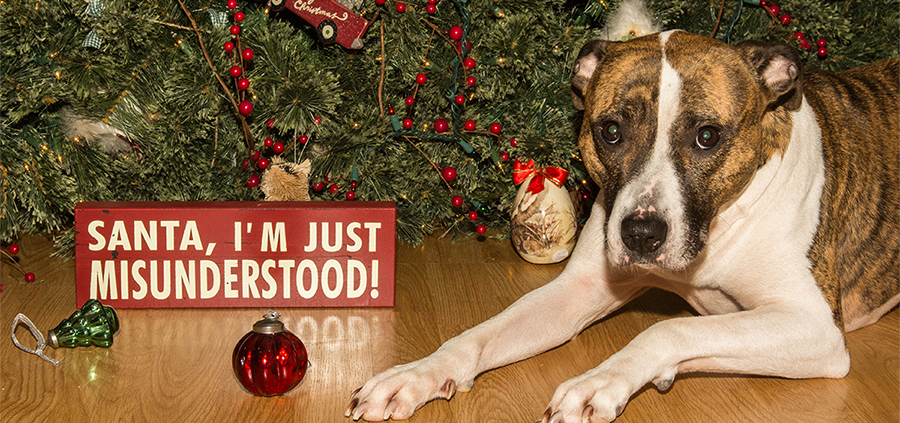
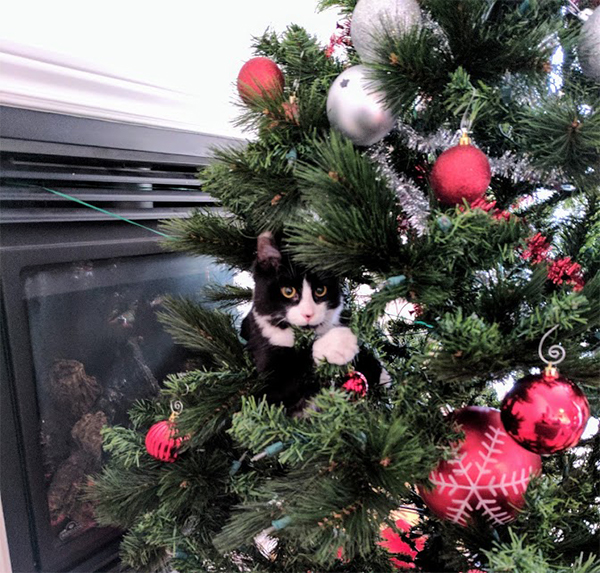
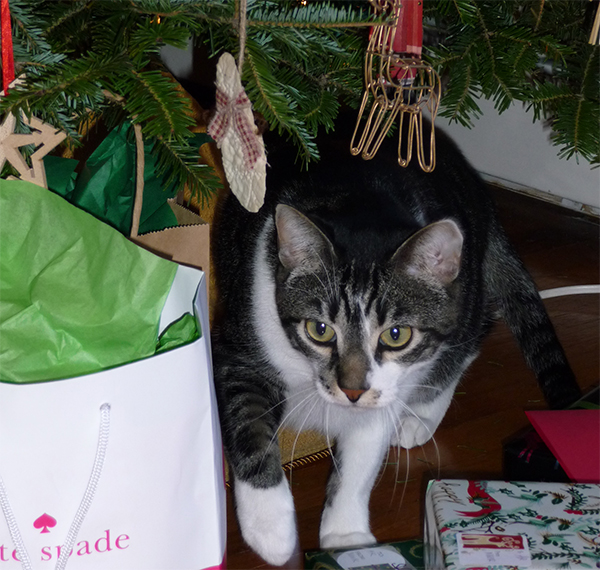
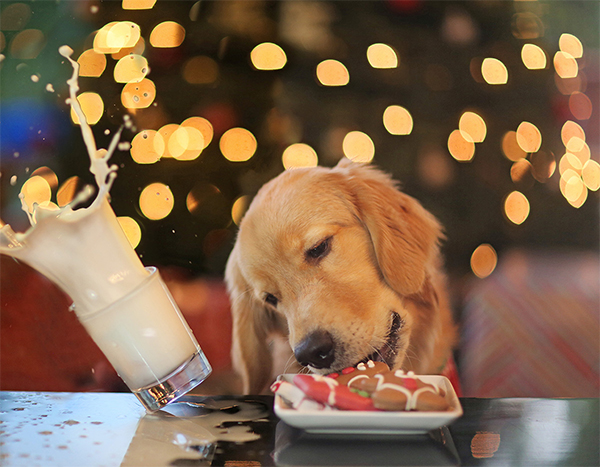
‘Tis the season for giving and good cheer as well as for decorating our homes with lights, live trees, pretty plants, and more. Though beautiful, these holiday additions can pose significant health threats to pets. Learn what holiday decorations are dangerous for pets, so you can deck the halls beautifully and worry-free.
Christmas Trees & Pet Safety
Central to most homes during the holidays is a Christmas tree, and many like to decorate with a live tree. If you prefer live to faux, here are some dangers your tree may pose for your pet:
Tree water: Stagnant tree water breeds bacteria, which, if consumed, could make your pet sick. Tree water can also contain fertilizer or other contaminants harmful to your pet. Lastly, any additives you put in tree water can make your pet sick if consumed.
Tree needles: Tree needles and branches can cause blockages that often need surgical intervention if consumed.
Tree flocking: Who doesn’t love a white Christmas? Flocking is pretty, but it’s mildly toxic to pets if consumed.
Falling trees: Cat and dog owners should anchor their real or faux tree to the ceiling to prevent their pets from knocking it over. The falling tree can hurt your pet, but spilled water and other debris can make for a tempting snack before you’re able to tidy the wreckage. Never mind that broken ornaments and accessible wiring pose their own problems.
Effects of Poinsettias & Other Holiday Plants if Eaten
Red, white, and pink poinsettias make a beautiful addition to your holiday home as do Christmas cacti and other plants; however, many plants are toxic to pets if consumed. Among those are:
Amaryllis
Mistletoe
Balsam
Pine
Cedar
Holly
Poinsettias
Veterinary intervention is essential if your pet consumes one of these plants. See what plants are dangerous and to what effect before decorating. The ASPCA has a list for dogs and for cats to help you.
How to Keep Pets Safe from Ornaments, Lights, & Other Holiday Décor
Needless to say, if natural décor isn’t pet-friendly, then synthetic décor surely isn’t. For example:
Electric light strands: Cords and light strands can lead to shocks and burns if consumed.
Candles: Flickering candles can look fun, but if upended, unattended candles can result in fires or burns.
Ornaments: If broken, ornament fragments could cause cuts and other external injuries as well as internal blockages and toxicity if consumed. Homemade ornaments are also potentially toxic.
While you can’t resolve all of these issues, certain ones, like flickering candles and broken ornaments can be minimized by buying plastic ornaments for the tree or by getting battery-operated holiday candles.
Holiday Treats that Aren’t Pet Friendly
Lastly, and much to the disappointment of many pets, is that the sweets and savories of the holidays are not good for them. Cookies and candies, holiday chocolates, dough, and table scraps from holiday meals often contain artificial flavorings or sweeteners or are simply foods that can make your pet very sick. It’s best to keep your pet well fed with a healthy and satisfying food that you know is safe.
Keeping Your Pet Safe
You can also throw in a few treats here or there like the natural ones made by Old Mother Hubbard, so your pet doesn’t feel like he’s missing out too much on the holiday cheer. In addition to going with a synthetic tree and unbreakable décor, you can also get a few extra toys to distract your pet with during the holidays. This will reduce the hazards around your holiday home making the season truly merry and bright (and a little more stress-free).
Being aware of holiday hazards in your home is one way to have a happy, safe time with your pet. Feeding your pet natural foods that will keep him full and healthy is another. Wellness Pet Foods are made with natural ingredients because our mission is to help guarantee a long and strong life for your pet.
It’s Senior Pet Month, so we wanted to take this opportunity to bring you profiles on some of the Wellness Pet Food team’s wisest, most mature pets from the perspective of their loving pet parents. From a loyal 17-year old Border Collie, Lhasa Apso mix to a former street kitty who’s now enjoying a life of leisure, we’ve tried to capture the unique experience of owning a senior pet. Keep reading to meet Abby, Isabelle, Bob and Sox.
Senior Pet: Abby, Mutt, Lab Mix Pet Parent: Elaine O., Wellness Brand Team
Elaine capturing a selfie with senior pup, Abby.
Q. How long have you had your senior pet?
I found Abby as a stray about six years ago. I was vacationing in Yosemite, and she had been the town stray for two years. She lived outside and the restaurants were feeding her. She showed up my first morning as I was eating breakfast on the hotel patio. She just sat quietly next to me with her hopeful eyes saying, “You probably don’t want that bacon, right?” It took about 30 seconds for me to fall in love. Best guesses from my vet, once I brought her home, was that she was around 6 or 7 years old. We found that she had fairly significant arthritis, already, and a repaired right ACL. Someone had obviously loved her, but she had no microchip. Of course, she does now! I brought her home to live with me and my then senior dog Max – he was 12 years old at that time. I’ve had a fair amount of experience with senior pets. Max was with me until he was 16, and my dog before him was with me until she was 14. Abby is now 12 to 13 years old.
Q. What’s the best thing about having a senior pet?
If you’ve had your pet for some time, the bond between you, when they move into their senior years, is that much stronger. They’ve seen you through so much in your life. At least, that’s how it’s been for me. When Abby looks at me, I know she knows…And Senior dogs like to spend more time ‘lovin’. Abby loves everyone. She’s still curious and engaged, but she also is much more content. And, at least with Abby, her body stiffness gives her a unique way of moving that is very endearing. She still gets excited about walks and mealtime (especially about mealtime), but instead of jumping around, she kind of does this stiff-legged dance. It’s adorable!
Q. What steps do you take to keep your senior pet in tip-top shape?
Because Abby has such significant arthritis, I do a lot to help her out. She goes for regular cold laser treatments to help with the swelling in her joints and water therapy (she swims) to keep her muscle tone and strength. Since she’s not a runner, anymore, the water therapy and exercise becomes very important to maintaining her health. I also learned how to give doggy massages which she gets just about every night. I give her Fish Oil supplements and a variety of supplements for her arthritis. I even make ‘golden paste’ for her, which is Turmeric – it’s a great natural remedy for arthritis.
Here’s Abby getting her cold laser therapy treatment (left) and paddling in the therapy pool
Q. What’s your pet’s favorite Wellness food or treat?
Abby loves all Wellness treats, but she has a special interest in WellBites. Yesterday, she managed to break into the treat cupboard. I have a healthy variety of treats to choose from in the cupboard, but she went for the WellBites!
For mealtime, Abby gets a special, customized blend of food, starting with one of our great dry kibble products as a base. I like CORE RawRev Wild Game, but I also use CORE Ocean. I mix in the CORE Tender Bites as a topper – this product is amazing! Then I add some fresh veggies like carrots, peas and spinach to make it a bit more interesting for her. She loves mealtime! It’s her favorite part of the day! And I love to see her dance around while I get her meal ready – so it’s my favorite part of the day, too.
At 17, Isabelle is our most senior lady here at Wellness.
Q. How long have you had your senior pet?
I was on an email list for a local rescue group, and they let me know that a family in Poland Spring, Maine had puppies available for adoption. The puppies were a mix of Border Collie and Lhasa Apso (that’s what they told us, at least!). We drove more than four hours from Southern New Hampshire to pick her up. She was only 6 weeks old and was such a little peanut. (Back then, I was not as knowledgeable about adopting a puppy, and didn’t know that she shouldn’t have been adopted before she was two months old.) Isabelle was a handful when she was puppy. I enrolled her in puppy training classes, but we never graduated…she was not a model student! She complies half the time, but her sweet personality always makes up for any naughty behavior.
Q. What’s the best thing about having a senior pet?
Isabelle at 17-years-old.
As she’s continued to grow older, she has kept her puppy-like joy and happy-no-matter-what attitude, even though she’s lost some mobility in her legs, and her sight isn’t as sharp as it used to be. Although her body has slowed down, Isabelle’s personality has become even softer. Her tail still wags when I come home, or when she gets to go outside and play in the grass. Plus, I’m still her favorite; she follows me around the house–when I leave a room she moves with me, and she sleeps by my side every night. I know that each day I have her I’m incredibly lucky she’s been a member of our family for so long.
Q. What steps do you take to keep your senior pet in tip-top shape?
As a member of my family, I’ve always wanted Isabelle to have the best life she can. Caring for a senior pet can be hard work, not to mention the emotions you experience seeing them not be able to jump as high as they once could, or not hear you when you call their name. As the oldest of our three pets (we have a Sheltie named Stanley, and a Tortoiseshell cat named Brownee), Isabelle is the most spoiled. She has a plush orthopedic bed, which increases circulation and reduces stiffness — perfect for dogs with arthritis. We’ve elevated her food and water bowls so it’s easier for her to eat and drink. And as a perk of being a member of the WellPet family, she enjoys Old Mother Hubbard Hip and Joint All-Natural Dog Snacks and daily meals of Wellness Homestyle Stews like Turkey & Duck with Sweet Potatoes & Cranberries – perfect for the Fall and Holiday season.
Q. What’s your pet’s favorite Wellness food or treat?
Isabelle has been enjoying Wellness Complete Health Whitefish & Sweet Potatoes since I joined WellPet as a marketing team member back in 2006! She now loves our new Wellness Complete Health Grain Free recipes. Everyone always asks, “what’s the secret to having a dog that’s 17 years old?”. She continues to live such a healthy life because she’s been a Wellness dog for so long. She’s a true testament to the power of natural nutrition for our furry family members.
Senior Pet: Bob, Domestic Longhair, Maine-Coon Mix Pet Parent: Carly W., Marketing
Q. How long have you had your senior pet?
We’ve been grateful to have had Bob for the last 6 ½ years. When we adopted Bob, the shelter told us he was known by locals to have lived in a trailer park as a stray for two years before he was rescued (even through the harsh New England winters). When we took him to the vet in 2011, they estimated his age at 8-10 years old, so we think he’s about 15 or 16 years old today.
When he was first rescued, Bob got a terrible haircut to remove his mats. As you can see, he was not at all happy about this.
Photo from the first day Bob was brought home. He immediately made himself comfortable!
When we first took Bob home, we found he had many health problems—fleas, infections, bad teeth, asthma and a heart condition! But he’s always had the most loving, endearing temperament, so working through his health problems seemed like no big deal. Along with a lot of healing snuggles and purrs, we credit his health improvements to his food. From the time we started feeding Wellness, we noticed his allergic dermatitis heal and his coat turn silky smooth.
Q. What’s the best thing about having a senior pet?
Senior pets are the best! When we adopted Bob, we knew exactly what to expect from his personality. Bob has a lot of wisdom from his experience on the streets–you can tell from his eyes. He’s not easily rattled, and always makes it clear if he needs food or pets. He still loves to play a little each day, but is usually content to snuggle with us on the couch or sleep in one of his favorite spots (he rotates between a few).
Bob showing off his salt-and-pepper muzzle.
Q. What steps do you take to keep your senior pet in tip-top shape?
Bob is a longhaired cat so we brush him regularly to cut down on hairballs and make it easier for him to groom himself. We play with him and take him outside in a supervised, fenced-in area so he can enjoy the outdoors when the weather is nice. We give him a pill each day for his heart, and take him to the vet regularly. We also feed him Wellness wet food exclusively which keeps him hydrated and is easier on his teeth. We monitor his weight and if he seems to be losing or gaining weight, we adjust his diet accordingly.
Q. What’s your pet’s favorite Wellness food or treat?
Bob getting spoiled on National Cat Day with an array of Wellness Kittles.
Senior Pet: Sox, Lab Mix Pet Parent: Beth C., Sales
Q. How long have you had your senior pet?
Sox has been a member of the Carchia family since he was a teeny pup, 11.5 years! Sox came to live with me and my husband when my Father in Law became too ill to care for him, so Sox has been living with us for about 2.5 years.
Here’s Sox as a youngster, repping his Bruins jersey!
Q. What’s the best thing about having a senior pet?
The best thing about a senior pet is the love they share with you. They know you and your routine better than you do sometimes and we can set our watch by him. Sox knows exactly when we are planning to take him for a walk, when it’s dinner time, when he’s supposed to get his treats (he certainly reminds us when we are late!) and when it’s time to cuddle on the couch. Senior dogs come at a different pace. Sox has arthritis in his hips so he’s not as fast as he used to be, but that makes him more content to just be with us on a slow walk or a car ride instead of constantly being on the run. Since we have a baby this makes our life a little easier to manage!
Q. What steps do you take to keep your senior pet in tip-top shape?
Sox is still young at heart!
Sox eats Holistic Select for his diet and gets at least a 30 min walk every single day. His food helps him maintain a healthy weight, good digestion and has extra nutrients to help with his bones and joints. Walks are very important for older dogs with arthritis, the better shape they are in and consistent exercise keeps his joints from stiffening up. He also receives a hip/joint supplement every day, as well as a pain medication 2x/day for his arthritis. We take him to doggie daycare once a week to keep him socialized and get him extra exercise. He is one of 3 senior pups there and is a staff favorite! Daycare keeps him young at heart and likes to try and play with all of the younger pups!
Q. What’s your pet’s favorite Wellness food or treat?
We’d love to see photos and read stories about your senior pets! Post on Facebook, Twitter or Instagram using: #wellnesspetfood and #seniorwellnesspet. We’ll feature some of our favorites on our website!
I have always been a dog lover. And when the time came for me to get my own dog, I knew exactly what I wanted. A dog that shared my same passions. A dog that would go on countless adventures with me and be my loyal companion and best friend. Koda, a weimaraner, enjoys swimming, hiking, smelling and most of all sticks. He’s always by my side. He’s deathly afraid of losing track of me and hates it even worse when I’m gone. He’ll nervously chew his tail when I’m gone. One week ago, Koda set out on his first big adventure – a road trip from Colorado to Washington State.
Packing and Prepping
As my girlfriend (aka Koda’s girl) and I packed up our apartment and loaded up the truck Koda began to stress. Nervously barking and racing around the house, he was beyond worried that he would get left behind. He goes absolutely everywhere with us, yet always acts as if he’s actually going to be abandoned or left behind. When we finally finished packing and grabbed his leash, excitement came over Koda. He knew that we were going exploring and he was pretty sure that he was going to come along.
Here’s our “camping with a dog carry” which includes Koda’s backpack, fishing gear,CORE 100%and my Nikon, of course.
Hittin’ the Road
Within 30 minutes of driving, Koda gave up his anxious pacing across the backseat, and was sound asleep. Occasionally he would wake up and smell around for the Wellness treats he knew were in the car, find one to eat (or ten), and then fall right back to sleep.
Pinedale, Wyoming
Our first stop was Pinedale, Wyoming. Located at the base of the Wind River Mountain Range, Pinedale was the perfect place to stop and adventure. After a good night’s rest and a big breakfast, it was time to explore! We spent the day fishing, hiking, and chasing sticks. Koda ran miles and miles and chewed up at least fifty sticks. That afternoon, we set out for the next destination, Jackson Hole and Koda’s first trip to a National Park.
Taking a break from snowball chasing in Yellowstone to refuel with Wellness treats!
Waking up to snow in Jackson, we ventured into the Grand Teton National Park. Koda knew he was going to get to do lots of adventuring here and he couldn’t wait to eat frozen sticks and chase snowballs that, much to his surprise, he would never find. Stopping several times throughout the park to get out and explore, Koda was having the time of his life.
Yellowstone
Koda’s favorite snack! He might love hisCORE Pure Rewardsmore than sticks.
After we passed through The Grand Tetons, Yellowstone was next on our list. There would be no naps for Koda today as we drove past herds of buffalo and elk. Koda wanted nothing more than to get out and play with the buffalo as they walked within inches of our truck! I imagine he thought they were just another large dog he might play with at a dog park.
Bozeman, Montana
Koda soaking up the sun on the Madison River with his girl, Kylie.
With two National Parks behind us, Bozeman, Montana, was our next stop on the list. Although we spent countless hours fishing together, Koda had never been on a boat. We did have him on a paddle board one time, which went shockingly well. During our stay in Bozeman, Koda floated the Madison River – a river known around the world for its beautiful sights and hungry trout! Koda was amazing on the boat, He never tried to jump overboard after ducks or fish. He just sat back and enjoyed the ride. And also ate an entire bag of his Wellness treats while we were busy fishing.
No Place Like Home
After a weekend filled with adventures and meeting new friends in Bozeman, it was time to start the final leg of out journey. Only twelve hours until we were finally home. Although Koda has spent the majority of his first year in Colorado, he is a Washingtonian. Koda is powered daily by Wellness and is already itching for his next big adventure. Time for his first trip to the ocean!
Autumn is here and the feeling of fall is in the air. Pumpkin spice is on every menu, the air is cool, the leaves are extraordinary colors, and Thanksgiving planning has begun! I don’t know about you, but Thanksgiving is one of my all-time favorite holidays. And as much as we all love the amazing Thanksgiving food and festivities, so do our pets. My dog Dory sits patiently in the kitchen all day while I prepare Thanksgiving dinner for our family waiting for me to drop a piece of turkey or offer some mashed potatoes. Unfortunately, as a small animal veterinarian, this is a common time of year when I see many emergencies from pets eating “human” food that can cause illness. So today, I would like to take a moment to discuss the typical autumn and Thanksgiving foods that are toxic for our pets, what clinical signs that you may see, and what you need to do if your pet eats these foods.
Onions, Garlic, Chives
I know…who knew? These food items are commonly used in preparing Thanksgiving dinner. Cats are actually more susceptible to the toxic effects of onions, garlic, and chives; however, dogs are also at risk. The toxicity causes a condition called hemolytic anemia, which is characterized by the bursting of red blood cells circulating through your pet’s body. Ingestion can also cause less critical side effects such as gastrointestinal irritation. Toxicity is normally diagnosed through history, clinical signs and microscopic evaluation of red blood cells.
Grapes and Raisins
Some fruits are more common for consumption during autumn months. Although the toxic substance within grapes and raisins is unknown, these fruits can cause kidney failure in dogs. It is best to avoid feeding grapes and raisins to dogs altogether.
Macadamia Nuts
Although not as common, many people bake cookies and desserts with macadamia nuts. Weakness, depression, vomiting, tremors and hyperthermia are common clinical signs associated with macadamia nut ingestion in dogs. Signs usually appear within 12 hours of ingestion and can last approximately 12 to 48 hours.
Nuts
Nuts, including almonds, pecans, and walnuts, contain high amounts of oils and fats. Foods that are high in oils and fats can cause vomiting, diarrhea, and potentially pancreatitis in pets.
Milk and Dairy
Milk and cream are common ingredients in Thanksgiving foods. Please be cautious with dairy. Despite what many people believe, pets do not digest dairy products well. Dogs and cats do not have significant amounts of lactase, the enzyme that breaks down lactose in milk. Milk and other dairy-based products cause your pet to suffer from diarrhea or other stomach upset.
Salt and Salty Snack Foods
Pretzels and potato chips are in abundance during the football season. Large amounts of salt can produce excessive thirst and urination, or even sodium-ion poisoning in pets. Salt toxicity clinical signs include vomiting, diarrhea, depression, tremors, elevated body temperature, seizures and even death. Please avoid giving your pets foods that are high in salts such as potato chips or pretzels.
Alcohol
I know, I know, this seems obvious, right? Well you would be surprised how many times I have seen alcohol intoxication on emergency. Most cases are accidents. Clinical signs include vomiting, diarrhea, decreased coordination, central nervous system depression, difficulty breathing, tremors, abnormal blood acidity, coma and even death. If your pet has ingested alcohol, see or contact your veterinarian immediately.
Chocolate, Coffee and Caffeine
Chocolate, ice-cream, and desserts are a big part of the Thanksgiving meal, especially if you have children. Chocolate contains two ingredients that are toxic in large quantities: theobromine and caffeine. Different types of chocolate contain different amounts of theobromine and caffeine; therefore, the amount and the type of chocolate your pet eats plays a role in its toxic effects. Darker chocolate is more dangerous than milk chocolate. White chocolate has the lowest level of theobromine, while baking chocolate contains the highest. Clinical signs of chocolate toxicity include diarrhea or vomiting from the high-fat content in the chocolate, restlessness, hyperactivity, muscle twitching, tremors, increased drinking and urination, excessive panting, irritability, increased heart rate and abnormal heart rhythm.
Raw or Undercooked Meat, Eggs and Bones
Raw meat and raw eggs can contain bacteria such as salmonella and E. coli that can be harmful to pets and humans. Pets can choke on bones, or sustain injury should the bone splinter become lodged in or puncture their digestive tract.
Yeast Dough
I have seen this emergency a few times. When pets digest raw yeast dough, the dough can expand and rise in the GI tract, causing gas to accumulate. This can be painful and cause the stomach to bloat, and potentially twist, becoming a life-threatening emergency. In addition, the yeast produces ethanol as a bi-product and a dog ingesting raw dough may become drunk (see the section on alcohol above).
I hope this helps all my pet parents out there be more aware of all the possible common autumn foods that can be dangerous for your pets. There is no need for your pets to feel left out. Let them indulge on Thanksgiving! I tell all my pet parents to have your Thanksgiving treats and food easily accessible during the holiday festivities and spoil your pets rotten. I absolutely love and trust Wellness CORE and it is what feed my own dog. Wellness CORE is a balanced diet that is grain free, contains all the highest quality ingredients, added supplements (omega 3 fatty acids, and glucosamine), and higher protein for lean body mass and muscle tone. My goal is to always keep our pets safe and healthy. As much as I love seeing them walk through my animal hospital doors, I prefer to help avoid sick trips to the veterinarian, especially during Thanksgiving when you should be spending time being grateful with your closest friends, family, and of course your pets.
Hello everyone! My name is Alison Streit and I am Forever Freckled’s veterinarian. Being a veterinarian has been my dream job since I could barely speak. Over the past six years, I have dedicated my life to building, opening, and running an animal hospital in Fort Lauderdale, Florida, accomplishing a life long goal of mine. It has been an amazing journey turning my passion for animals into a career. I know pets are our family and nothing brings me more joy than to help pets and their parents with wellness and healthy living. In addition to being a veterinarian, I am a wife to my amazing husband Rob, and a mommy to my greatest accomplishments and the most unbelievable joy for me, my children Luke, Leah and Hayden. Everyday I feel so lucky to have pursued my dreams to take care of animals, and become a wife and mother. I am so proud to have started Forever Freckled with my sisters and develop a platform to help people and pets on their life journeys.
Wellness Pet Food participated as a head Paw It Forward event sponsor, donating over $1,000 of natural cat food
Over $1,000 in donated cat food and treats for KittyKind Rescue.
On October 14, 2017, the cat people were in full effect in New York City. Cat lovers far and wide convened for Paw It Forward NYC, a fundraiser for cats.
Now in its third year, the event saw over 150 guests and raised over $8,500 for this year’s benefit rescue, KittyKind. Each year, the event organizers choose a non-profit rescue and 100% of the proceeds are donated directly to the organization.
This year’s chosen shelter, KittyKind, is a local NYC no-kill, all-volunteer, rescue who also also provides NYC’s first cat café – Meow Parlour – with their adoptable cats.
Cat lovers walk the red carpet at Paw It Forward NYC. Photo via @madebyroman.
Paw It Forward started as a low-key gathering to unite the human faces behind their Instagram-famous cats. Several meetups later, the idea for a fundraiser was born – something that could benefit cats while serving as a social hub for cat Instagrammers – so in the Fall of 2015, the first Paw It Forward took place. Using brand connections garnered from the organizers’ Insta-famous cats, the event featured cat-centric raffles and an open bar, and 100% of the proceeds were donated to the event’s charity of choice. In the 2015 and 2016 installments of the event, over $10,000 was raised and donated to Sean Casey Animal Rescue and Jersey Cats, respectively. In 2017 alone, over $8,500 in monetary and product donation was raised for KittyKind.
Cat lovers walk the red carpet at Paw It Forward NYC. Photo via @madebyroman.
Mainly discovered by guests via organic reach on Instagram, the event’s turnout has grown exponentially each year. Guests fly in from all over the US to meet and mingle with other Instagram cat owners, and many bring cat merch featuring their furbaby’s face on stickers and business cards even clothing! The organizers are made up of a crew of NYC-based cat ladies with strong social media presences: @_porkchopthecat, @tinaf78, @life_of_ziggy, @thatcatblog, and @rukasthecat. Collectively, they have a reach of over 500K followers across platforms and are able to secure tons of fabulous product donations that are raffled off at the event. Sponsors range from human-focused products like Kate Spade and ConAir, to beloved pet brands such as Wellness, PetMate, and MeowBox. Guests who win prizes often Instagram their cats using the products, giving brands great organic exposure.
Paw it Forward MC pulls a winning raffle ticket. Photo via @madebyroman.
A lucky raffle basket winner celebrates her new cat goodies. Photo via @madebyroman.
This year, Wellness contributed the largest product donation ever – over $1,000 worth of Wellness product went directly to KittyKind.
Aside from the satisfaction of donating to a rescue each year, the best part about Paw It Forward is the chance to meet virtual cat-loving friends from across the US. Paw It Forward NYC hopes to continue the tradition in 2018 and beyond with even bigger events! If you are a cat lover and wish to get involved, please email pawitforwardnyc@gmail.com or submit an inquiry through the website, www.pawitforward.nyc. 2018’s event will be scheduled for Fall, date to be announced – “like” our Facebook page for updates. Hope to see you there!
I’ll start with a confession: I’m embarrassed to say that even though I have spent my entire career in pet food, I have never had a dog or cat.
In contrast, my wife, Rachael always had pets—cats, dogs, a bird, and a turtle—until she met me. As long as I can remember I wanted a dog, but for one reason (excuse) or another the time was not right. Between our jobs and satisfying our wanderlust, we didn’t feel it would be fair to be kenneling a dog all the time. Fast forward three years and one baby later, we decided there was no time like present.
We knew we wanted our kids to grow up with a dog, but that also meant we needed to find a baby friendly dog. After searching through what felt like hundreds of PetFinder profiles, we came across Moana, a beautiful 3 year old lab hound mix.
Moana, an adorable lab, hound mix pup.
We wanted to rescue, but felt the need to meet the dog with our son before committing. Since the number of adoptable baby friendly dogs in the Boston area was limited, it took some time to find Moana. When we met her through Great Dog Rescue New England, Moana was so gentle with our 8 month old son. Even when he tugged her ear, pulled her tail, or used her as a walker she stayed unflappable.
Moana making best friends with her new brother.
We knew we had met the dog for us, and after wrapping up the formalities and picking up supplies—like some CORE food and WHIMZEES treats—we were going to have a new family member!
On October 11th Moana joined our family and has fulfilled a lifetime wish.
I was nervous and anxious that first night, especially because once I got home Rachael was leaving me alone with both Moana and our son! Thankfully Moana adjusted well to our house, and while it’s not been all sunshine and rainbows it has been easier and more fun than expected!
Robert’s son helping get Moana her dinner, Wellness CORE!
Moana fit right in to our busy lives. She’s loved going hiking, playing outside, and snuggling on the couch at the end of a long day. She particularly has connected with our son. She guards the stroller on walks and is our son’s personal jungle gym. Whenever he sees her—especially after a nap—he gives the biggest smile. Our son adores his doggy and loves it when she tries to give him kisses.
Moana taking a walk with her brother.
Q. How did you prepare your home to welcome the dog with your baby?
Since Moana was already house trained and seemed to behave well it didn’t take much preparation Just to be safe we picked up some shoes and toys to reduce any temptation. We set up her crate, dog bed, and water bowl. Our first day together she picked her spot on the couch, and we realized that we needed to set-up a baby gate on the stairs for both her and our son.
Moana loves snuggling with us on the couch!
Q. What advice would you give to a new parent(s) interested in welcoming a dog into the home?
Meet the dog first with your baby, but if you’re waiting, don’t. Just do it. There are so many dogs that need a home and the more we wait the more there are. It’s not as hard as we were anticipating. In some ways Moana helps – our son has an easier time waking up once he sees Moana. When walking with the stroller, Moana is very protective and keeps her eye on our son. She also tries to help by cleaning up his spit-up…gross.
Q. What are some of the challenges of caring for a baby and dog simultaneously?
There are certainly some challenges caring for a dog and baby. Like when Rachael is home alone and feeding our son, but Moana also needs to go out. Or when Rachael is pushing the stroller and Moana smells something she’s interested in. However, overall it’s not been as hard as we were anticipating. Rachael is definitely busier at home than she was without a dog, but it’s worth it!
Moana has been the perfect addition to our family, and we couldn’t be happier! I finally know what I was missing out on all of these years, and I’m looking forward to many years of great memories with Moana.
This year marked the earliest occurrence of Earth Overshoot Day, the date when humanity has used up more resources than the planet can renew for the year. Since the day we blew our ‘budget’ (this year’s EOD fell on August 2), humans have essentially been digging ourselves deeper into a deficit with the planet, a finite cradle of resources and the only Earth we have to live on.
What does this have to do with our pets? Animal family members have a significant carbon paw print.
Because domesticated animals are kept (by us, their humans) outside of nature’s regenerative, waste-less system, the food they eat and the waste they create is not readily renewed or absorbed. Knowing this, it is up to us to make better choices as pet owners to offset our pets’ impacts and make them friendlier to the planet.
Don’t overfeed your pet.
One of the most energy intensive things about domesticated dogs and cats is the meat-based diet they like to eat. High-protein nutrition, as opposed to plant-forward fillers, is favored for your pet’s optimal health and happiness. But as we know about human-food, it takes more energy and resources to produce animal proteins than plant proteins.
That being said, high-quality, grain-free pet foods are nutrient and calorie dense, so without the fillers you will find that your pet’s overall portion size can be smaller with these types of foods. Pets do not have the reasoning to monitor their own food intake, so if we do put more food in front of them than they need, they will eat it. Feeding your pet high-quality food, in the right amount for their breed and body type ensures firmer, smaller stools, preventing unnecessary strain on the earth’s resources. Overall, a healthy diet means less trips to the vet, keeping your loved one in shape for as long as possible.
Photo via hehaden, Flickr.
Recycle your pet food packaging.
Plastic is plastic and can be recycled, right? Sadly, the answer is no. Most pet food bags, many of which are entirely made up of plastic, fall into the category of an item that is unrecyclable curbside. Comprised of flexible, multi-layer films, the composition of the bags is a combination of several different plastics, which require separating and processing that your municipal recycler does not have the capability to handle.
Wellness Natural Pet Food takes responsibility for its plastics packaging and makes it easy for pet owners to recycle it for free with the Wellness Pet Food Recycling Program. Bonus: the more you recycle, the more points you earn in exchange for a cash donation to your favorite pet charity.
Buy less stuff.
Photo via Krista Mangulsone.
Of course, the best thing you can do to reduce waste, whether or not you own a pet, is buy less stuff. With everything from pet food, chew toys and collars available with as little as a click or a tap of the smartphone, spoiling your pet is easy. But the more we buy, the greater the demand for inexpensive, plastic-forward items that are unrecyclable and the more waste that gets produced. Whenever you can, make toys out of things you already have. Many dogs are happy to chew on old stuffed animals, cats love boxes, and if you want to dress up your pet (be it for weather or their next big birthday), grab some old clothes and a friend with sewing skills.
When you do buy things for your furry friends, do it from brands and companies making their products with more environmentally friendly material. Instead of your standard clay litter, for example, opt for a more sustainable litter that is made of things that are biodegradable, such as wheat, corn, walnut shells, dried wood, grass or even recycled newspapers.
You also can help pet shelters and new pet parents reduce their consumption and save money for other expenses by donating your gently used pet items so they don’t need to buy new. Toys, leashes, collars, beds and cat towers are all things that animals need, and blankets, wash cloths and other old textiles are great for keeping animals nice and warm while they wait for their new homes.
Our pets are family, so doing right by them and by the planet may seem like a tall order. But when you think about it, their needs are very simple. And believe us: your pets know you love them.
As the days start to get colder many pet owners begin to notice that their pet shows signs of slowing down or experience increased difficulty moving around as freely as they would normally do. Whilst these joint and mobility issues can affect dogs of any age and size the most prevalent groups include those who are older pets, overweight or obese or those from larger breeds.
There are many conditions that can present as mobility challenges and left untreated these conditions often exacerbate over time leading to long-term mobility and general health issues that can significantly impact a pet’s quality of life. Affecting 1 in 5 dogs the most common cause of a mobility issue is osteoarthritis which may affect more than one joint and is highly predisposed in a joint that has been impacted by age, trauma or genetics.
What are the signs to watch if you think your pet has a joint or mobility issue?
• Reluctance to stand
• Difficulty walking and climbing stairs
• Lameness/limping
• Stiffness
• Sudden weight gain
• Moving slower/low activity level
• Cautious when walking
• Change in behavior/hesitant to play
Treating and supporting pets with joint and mobility issues is exceptionally important. Conditions like osteoarthritis are chronic diseases that become progressive due to its nature of causing degenerative changes to the structure and function of the cartilage within the joint.
So what should a pet owner do if they are starting to see these signs in their pet?
There are several treatment options available that will vary dependent upon the cause and severity of a dog’s condition as well as most importantly the recommendation from their veterinarian. They treatment choices include pain relief and anti-inflammatories to help them feel more comfortable, nutraceuticals to help support cartilage health as well as minimize further wear and tear and then lastly nutritional support to promote overall well-being and a healthy body condition to support muscle and joint health.
The role of nutrition
Nutrition is essential to support a pet’s lean body mass and promote joint health so that they can be in the best shape possible to enjoy an active and happy life. Given mobility issues are caused by such a wide array of conditions, the most important factors to consider when selecting a brand are the following three focuses:
Keeping them lean with strong muscle and a healthy weight
Increased levels of omega 3 fatty acids
Adding glucosamine and chondroitin sulfate
A Feeding Strategy that Keeps Pets Lean
Pets that are overweight and obese are significantly more predisposed to suffer osteoarthritis. Maintaining a healthy body weight as well as strong lean muscles is one of the best ways to help support joints and mobility as well as delay the onset of osteoarthritis in some pets. To achieve this healthy body condition you want to select a diet based on higher meat content to build muscles. Muscles help protect joints and when combined with lower in carbohydrates these recipes are proven to build the right body condition that will increase the muscle in pets already suffering mobility concerns as well as help prevent the onset of any issues in those pets who are at higher risk.
Increased Levels of Omega Fatty Acids
Omega fatty acids play an important role in reducing the presence and severity of inflammation that is associated with joint swelling and pain which intern lead to mobility issues. Selecting a diet rich in fish oils and flaxseed delivers a recipe that naturally contains higher levels of omega-3 fatty acids, making it an ideal choice for pets with joint concerns.
Adding Glucosamine Hydrochloride and Chondroitin Sulfate
Nutrients such as glucosamine and chondroitin sulfate occur naturally in the body and are the building blocks of healthy cartilage. When contained in a dog’s diet, they can help support healthy joints by constantly replenishing the nutritional reservoir for normal cartilage maintenance
We’re happy to introduce Jessica Denoncourt, Regulatory Affairs Specialist at WellPet who’s here to share her personal story about adopting her best friend, Maggie the dog. (above photo via Brooke Whicher)
Q. Why did you decide to adopt a dog?
I grew up always wanting a dog of my own. My mom always said no because she was afraid that we (the kids) wouldn’t own up to the responsibility of having a dog. I had moved out and knew with that, a dog was in my future. My partner and I had been together for a few months and our schedules worked out perfectly (one during the day, one during the evening) to welcome a dog into our little family.
Q. What’s Maggie’s story and why did you choose her?
I was watching the Puppy Bowl 2014, as one does, and saw the little bulletin that all the puppies feature in the Puppy Bowl are available for adoption. I decided to look into their stories and see who had been adopted and what the happy-endings were. That led me to Petfinder. I branched off from looking at stories about puppies across the country to looking up a local rescue in my area – Great Dog Rescue New England. I saw Maggie’s little face and just knew she was my dog. At the time, her name was Pipsqueak (rude!). There was something about her sweet face that I connected with. My partner had fallen asleep on the couch, so I quietly filled out the application. I woke her up and said to her, “I either need you to tell me ‘yes, we can do this’ or I need you to talk me out of it.” Shortly after that conversation, I hit submit and we were off on our adoption process.
Maggie’s, (previously Pipsqueak’s), original Petfinder profile
Q. What was the most challenging thing about adopting Maggie?
Great Dog Rescue New England was very easy to work with. The only challenge that I faced was not getting my hopes up. Maggie was one of six little girl puppies. The initial email I received after submitting my application stated that they received several applications, would read through every one to find the ‘best match’ for each pup, and at any time, they could be adopted and unavailable. I told my partner to not buy anything, not to pick out any names, and not to talk about having a dog until we were sure it was happening. It’s very nerve-wracking, but it was well worth the wait. Everyone I dealt with within Great Dog was friendly, patient and answered all of my many, many questions.
Here’s Maggie shortly after we brought her home.
Q. What advice would you give someone interested in adopting a pet?
Be patient. Be patient with your new dog or puppy. Every dog is different and has their own personality. Puppies are adopted with little to no manners. Adolescent and older dogs sometimes carry baggage. With proper training and a good heart, it’s one of the most rewarding things. Be patient with yourself. Everything is a learning curve. Be patient working with your rescue. Most of them are volunteer based and have other jobs on top of helping find these dogs and puppies new homes. After adopting Maggie, I started volunteering with Great Dog Rescue New England. I wanted to give back in some way to the organization that gave me my best friend. It’s filled with great people who are there solely to help rescue dogs and puppies.
Maggie enjoying her new home
Q. What’s Maggie’s favorite Wellness food or treat?
Maggie LOVES WellBites. Any flavor. Any day. She is on it. We especially like WellBites because they’re soft and we can cut them up into little pieces. She’s just a small gal, so she gets little pieces.
Q. What do you value most about your relationship with Maggie?
Maggie is my best friend. She is always there, no matter the day I’ve had. Doesn’t matter if it’s early in the morning or late at night. She’s always there with her tail wagging excited to see me. No one is as excited to see me as she is!
“I was grateful to have Maggie be with me as part of my wedding day.”
Q. What’s her goofiest or quirkiest trait?
Maggie is a little dog with a big personality. My favorite trait of hers is that she LOVES scratches. You will be in the middle of doing something and she will march on top of you to demand scratches. You can be reading a book or typing on the computer and she will come over to paw at your hand until you relent and scratch her up. And if you aren’t scratching her just right and where she wants to be scratched, she will let you know and paw your hand to exactly the right spot. She’s our silly little Maggie.
Chances are, you know your pet needs regular wellness care, good food, and exercise to stay healthy. But did you ever wonder if there was a “Healthy Pet Checklist?” These six items form the basis of good health and will help your pet thrive. Let’s take a quick look:
1. Annual Wellness Visit
Your pet should have a yearly vet checkup that includes dental cleaning, updated vaccines, and heartworm test.
The types of vaccines your dog or cat will vary depending on their age, where you live, and your lifestyle. For example, while the rabies vaccine is recommended everywhere by law for both dogs and cats, your veterinarian may only recommend the Bordetella (kennel cough) vaccine if your dog is around other dogs frequently.
Your veterinarian will help you set a vaccination schedule that makes sense for your pets.
2. Spay or Neuter Your Pet
It extends their life expectancy and helps prevent overpopulation. While most pet parents think of spaying and neutering as a responsible way to prevent unwanted litters, you may not realize it also protects against certain types of cancers.
For example, spaying helps prevent uterine infections and breast cancer in females and neutering helps prevent testicular cancer in males.
3. Keep Your Pet on a Heartworm Preventive & Flea Control– Even if they’re inside pets!
Veterinarians recommend keeping your dogs and cats on year-round heartworm and flea & tick control. Yes, even if you live in colder areas of the country, ticks can still lurk outside your door just waiting for an opportunity to latch onto Rover when you go out for a walk.
And while it may seem silly to worry about mosquitoes (the pests that transmit the heartworm disease) in January, fluctuating weather, or a road trip to the South can bring risk.
Please protect your pets year-round.
4. Microchip Your Pet So They Can Find Their Way Home if Lost
While no one thinks their pet will go missing, one in three pets do every year. According to Petfinder.com, microchipping your pets can have a 238% increase in the chances of reuniting with your dog and a whopping 2000% increase in reuniting with your cat.
It’s a simple process done at your veterinarian’s office and costs about $45. Then you’ll need to register your pet with the microchip database and include your updated contact information.
5. Bathe Your Pet Regularly for Healthy Skin
How often does your pet need a bath? It depends on their health. Healthy dogs and cats don’t require a weekly bath. In fact, it can dry out their skin. They may only need one bath a couple of times a month. However, every dog and cat benefits from frequent brushings (daily if you have a long-haired dog), nail trimmings, and ear cleanings.
Other pets will require frequent – more than once a week –baths with a medicated shampoo to treat irritated skin as it can provide relief. Your veterinarian can make recommendations about what’s right for your pet.
When you clean those ears, use an ear cleaning solution like a mix of hydrogen peroxide and water but use a damp cloth and your finger, never cotton swabs. They can damage your dog’s ears.
6. Give Proper Toys and Treats
Some dog chew toys can damage your dog’s teeth like some of the bones and rawhides that are available in pet stores. It’s better to go with softer chew toys that won’t damage teeth, and of course, we have a wide variety of healthy treats to spoil your pet without spoiling their healthy diet.
The technical storage or access is strictly necessary for the legitimate purpose of enabling the use of a specific service explicitly requested by the subscriber or user, or for the sole purpose of carrying out the transmission of a communication over an electronic communications network.
Preferences
The technical storage or access is necessary for the legitimate purpose of storing preferences that are not requested by the subscriber or user.
Statistics
The technical storage or access that is used exclusively for statistical purposes.The technical storage or access that is used exclusively for anonymous statistical purposes. Without a subpoena, voluntary compliance on the part of your Internet Service Provider, or additional records from a third party, information stored or retrieved for this purpose alone cannot usually be used to identify you.
Marketing
The technical storage or access is required to create user profiles to send advertising, or to track the user on a website or across several websites for similar marketing purposes.